We recently watched the film Dark Waters, starring and produced by Mark Ruffalo, and based on the 2016 New York Times Magazine article “The Lawyer Who Became DuPont’s Worst Nightmare” by Nathaniel Rich. It dramatizes a case against the chemical manufacturing corporation DuPont after they contaminated a town with unregulated chemicals.
I grew up in Louisiana’s “Cancer Alley”. Currently there are 30 petrochemical* plants within ten miles of that small town. This movie hit home since as a kid it was very common to hear about someone having a miscarriage or being diagnosed with some aggressive cancer and dying all too soon. Clearly these chemicals are bad. And watching this film lit a fire within me to try and reduce our reliance on plastics and petrochemical products at home. I know my own personal consumption will not stop people in St. Gabriel from getting cancer, but maybe it will inspire others to join me in being one less consumer putting money into the continuation of the cancer alleys anywhere.
I am not even going to get into microplastics. G__gle it.
Ultimately we want to reduce our consumption of single use plastics as well as no longer use plastics for eating and drinking. I will admit this can feel like a very wasteful and potentially expensive change. But here are the initial actions we have taken that include being thrifty and investing a little in some strategic purchases:
Ditch the plastics
As much as we can, we have thrown out plastic food storage and dishware. We had kids dishes from Ikea, and countless storage containers (a good half of which were missing lids or vice versa). It is funny how it always felt like we didn’t have enough, but now that I see them in a garbage bag I realize we were plastic rich (gulp). Admittedly I have kept some larger containers for organizing and storing non-food things. But as I am able to acquire or repurpose plastic free containers, I will replace these too.
Use what you have
Yes, I was tempted to immediately get glass rich. To avoid investing too much up front, I have been using what we have on hand. I had mason jars of all sizes tucked here and there. I have used the large-mouthed ones for saving cooked chicken wings, and I packed a salad in one to bring to work. It feels strange using what seems to be a liquid-only solution, but they work!
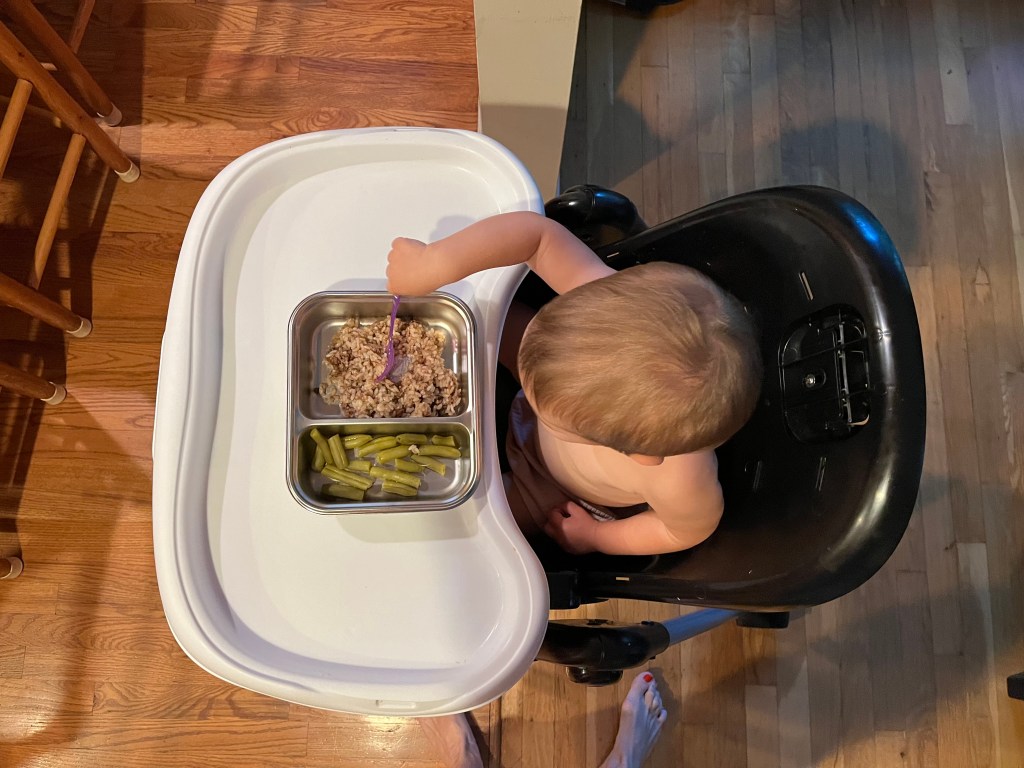
I also have gotten creative. The kids had plastic lunch boxes with compartmentalized steel inserts. I ripped those out and we’ve been using them for serving my toddler, who loves to drop her dish on the floor to signal she is done. What a delight! Steel is a great shatter-proof alternative to plastic.
I do have glass storage containers with plastic lids. For now I am keeping and using them. I need more time to think about if it is worth it. At the very least, I will keep the bottoms which I use for other things anyway–food prep, heating leftovers in the oven and so on.
Leftovers…how
No more plastic wrap. No more plastic zipper bags (JD is freaking out–he loves to put a sliver of a steak in a gallon sized freezer bag).
For large quantities of leftovers I use a casserole dish with a lid for something I will just refrigerate. I read a great post about freezing in mason jars (use wide mouth, and leave a couple inches for expansion!), and for dryer items to freeze I am using the most innocent parchment paper with a second layer of aluminum foil.
Enamelware
I really wanted to spend as little as possible, BUT the internet got me and I ordered a small set of enamelware dishes for the kids’ meals. Enamelware is going to stand the test of time, even if it chips, so I rationalized the purchase. Small plates, small bowls, and small tumblers are stored where small people can reach them and help themselves to a drink or a snack.
I have yet to fathom reducing plastics from here. Plastic is just so….prolific? I buy bar soap that is packaged in paper, but I believe that paper is lined with some thin plastic. I look around the living room: there is plastic in the components of every lamp. The zippers on the couch cushions. The television. The stuffing of the throw pillows. Toys. I look at the clothes I am wearing. Plastic buttons, plastic zippers, my glasses, my cotton blend socks, the high chair. It’s maddening and while I am not afraid of the slippery slope this may trigger, I do want to take the ride slowly. So for now we are working in the kitchen.
How are you making plastics a more minor character in your life? What is working well, and what has been the biggest challenge?
*Petrochemicals are chemical compounds derived from petroleum and natural gas, and are used to make many products (plastics, soaps, fertilizers, paints, insulation, batteries, clothing, and more).



 The Progressive Homesteader
Leave a comment